
Evergreen Hedge – Choosing, Planting and Proper Care
How to choose the right conifers for a dense and attractive evergreen hedge.
Evergreen Hedge – Choosing, Planting and Proper Care
How to choose the right conifers for a dense and attractive evergreen hedge.
An evergreen hedge is a natural way to define garden boundaries, create privacy and provide a permanent green backdrop.
Conifers are among the most popular plants for this purpose, but different species and cultivars vary in growth rate, habit, foliage colour and pruning requirements. The choice should therefore reflect the desired height and density of the hedge, the available space and the decorative effect you want to achieve.
Autumn is a suitable period for planting a conifer hedge. Moderate temperatures and reduced evaporation make it easier to maintain adequate soil moisture while the plants establish in their new location.
Which conifers should you choose for an evergreen hedge?
At Flora Design Garden Centre, we offer a range of conifers for hedging in different sizes, forms and foliage colours. This makes it possible to select plants according to the available space, desired height and density, and the overall garden design.
Different forms and sizes of Leyland Cypress
Leyland Cypress (× Cuprocyparis leylandii) is a classic fast-growing choice for a tall and dense evergreen hedge. It is suitable for property boundaries, long fence lines and areas where a relatively quick screening effect is required.
Leyland Cypress ‘Pyramidalis’ has a more upright, pyramidal habit and is suitable for neat linear plantings.
Leyland Cypress ‘Vito’ has dense green foliage and an upright growth habit, making it suitable for tall and dense evergreen screens.
Leyland Cypress ‘Gold Rider’ has attractive golden-yellow foliage and is suitable where both dense screening and a lighter decorative accent are desired.
Regular trimming is important for maintaining the desired height, width and density of Leyland Cypress hedges.
Different cultivars and sizes of Thuja
Thuja occidentalis ‘Smaragd’ has a naturally narrow, compact conical habit and rich green foliage. It is suitable for neat evergreen hedges and generally requires less intensive shaping than fast-growing Leyland Cypress.
Thuja ‘Golden Smaragd’ combines a compact conical habit with golden foliage and is suitable for decorative hedges and lighter colour accents.
Different cultivars and sizes of Arizona Cypress
Arizona cypresses are an attractive choice where both evergreen screening and distinctive foliage colour are desired.
Arizona Cypress (Cupressus arizonica) has grey-green to bluish foliage and is suitable for evergreen hedges, screens and linear plantings.
Arizona Cypress ‘Aurea’ introduces lighter golden tones and is an attractive option for a more decorative evergreen hedge.
Different Lawson Cypress cultivars
Lawson Cypress ‘Columnaris’ (Chamaecyparis lawsoniana ‘Columnaris’) has a narrow columnar habit and distinctive light blue-grey foliage. It is suitable for dense hedges, evergreen screens and linear plantings, particularly where a strong vertical form and cooler foliage colour are desired.
Lawson Cypress ‘Pelt’s Blue’ (Chamaecyparis lawsoniana ‘Pelt’s Blue’) has a narrow, upright habit and distinctive bluish foliage. Young growth is blue-grey, developing darker blue-green tones as it matures. It is suitable for decorative evergreen screens and linear plantings.
Chamaecyparis lawsoniana ‘Columnaris’ and ‘Pelt’s Blue’ are also suitable choices for landscaping projects at childcare and educational facilities, as the species is not included among the unsuitable plants listed in Appendix No. 1 to Bulgarian Ordinance No. 1 of 12 January 2009.
Green, golden or blue-grey evergreen hedge?
Foliage colour can significantly influence the overall appearance of a hedge.
For a classic green hedge, suitable choices include Leyland Cypress, ‘Pyramidalis’, ‘Vito’ and Thuja ‘Smaragd’.
For a golden effect, consider Leyland Cypress ‘Gold Rider’, Thuja ‘Golden Smaragd’ and Arizona Cypress ‘Aurea’.
For blue-grey and blue-green tones, Arizona Cypress, Lawson Cypress ‘Columnaris’ and ‘Pelt’s Blue’ provide attractive alternatives.
An evergreen hedge can therefore serve not only as a functional screen but also as a permanent decorative feature in the garden.
What size plants should you choose?
The size of the plants at the time of purchase mainly determines how quickly the desired visual effect will be achieved.
Younger plants are suitable for gradually establishing a hedge, while larger, well-developed specimens provide a more finished evergreen screen immediately after planting.
Larger plants require sufficient space for their root balls, thorough initial watering and, where necessary, temporary support.
How to plant a conifer hedge correctly
What planting distance should you use?
There is no single spacing suitable for every conifer hedge.
The correct distance depends on the species and cultivar, plant size, natural spread and desired density of the finished hedge.
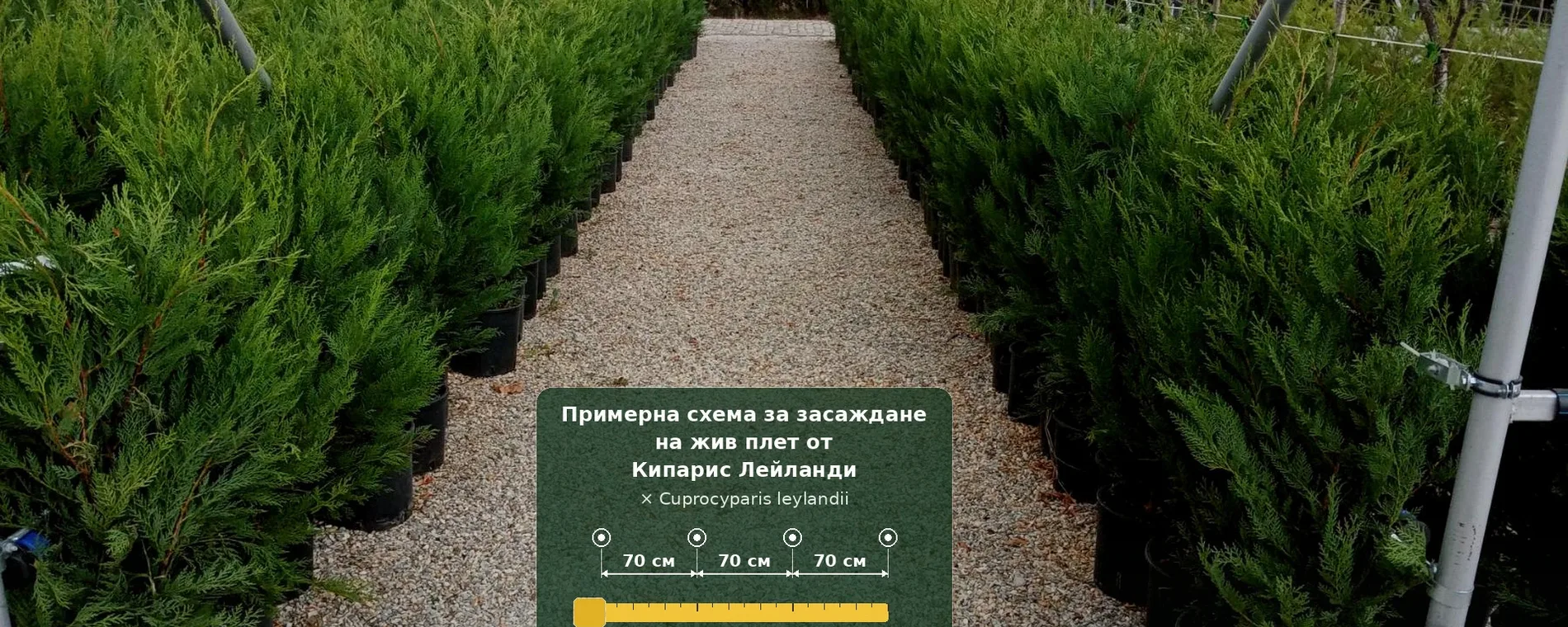
For Leyland Cypress, approximately 60–75 cm between plants is a useful general guideline. The final spacing should also take into account the size of the plants and the desired effect.
For other conifers, spacing should be determined according to the particular cultivar and plant size.
Avoid planting unnecessarily close simply to achieve an immediate screening effect. Plants need sufficient space for healthy long-term development.
A continuous planting trench or individual holes?
For a long, uniform hedge, a continuous planting trench is often the most practical solution.
Mark the hedge line first and prepare the soil along its entire length. This makes it easier to position the plants evenly and provide similar conditions for their root systems.
The width and depth of the trench should be determined by the size of the root balls. They should fit comfortably without being compressed, and the surrounding soil should be thoroughly loosened.
Individual planting holes can be used for shorter hedges.
Plants should not be planted deeper than the level at which they were growing in their containers.
Allow enough space for future growth
Consider the future width of the hedge when determining the planting line.
Avoid positioning plants directly against a fence, wall or other structure if this will later make pruning, watering or maintenance difficult.
This is particularly important for vigorous plants such as Leyland Cypress.
Soil preparation and enriched peat
Before planting, loosen the soil thoroughly and remove weeds, stones and heavily compacted areas.
To improve the soil structure and growing environment, 250 L bales of enriched peat can be mixed with the existing soil in the planting trench or holes.
The aim is to improve the conditions around the root system rather than fill the entire trench with peat.
Good drainage is particularly important in heavy soils that retain excess water.
Planting step by step
Arrange the plants along the prepared line before planting and check the spacing.
Carefully remove each plant from its container while keeping the root ball as intact as possible.
Position the plants at the correct depth, backfill with the prepared soil and gently firm it without excessive compaction.
After planting, water each plant thoroughly so that the soil around the root ball is evenly moistened.
Watering and care after planting
Drip irrigation is a practical solution for long hedges
Autumn planting does not mean that newly planted conifers can be left without additional watering.
Regularly monitor moisture around the root balls during establishment. Rainfall is not always sufficient.
For long hedges, drip irrigation is a practical method of delivering water evenly and in a controlled way along the planting line.
It is better to moisten the root zone thoroughly than to frequently wet only the surface layer.
Do not forget watering during the first year
During the first year after planting, regularly monitor soil moisture, particularly during warm and dry periods.
Newly planted conifers are still developing their root systems into the surrounding soil and are more sensitive to prolonged drought.
Conifer mulch and garden edging for easier maintenance
After planting, the soil beneath the hedge can be covered with conifer mulch.
It helps retain soil moisture, limits weed development and gives the planting a more finished appearance.
At Flora Design, we offer conifer mulch in different grades.
Where the hedge borders a lawn, garden edging provides a practical separation between the grass and the mulched planting strip. It limits grass encroachment, keeps the mulch in place and makes mowing and maintenance easier.
Garden edging is available in two sizes, allowing the most suitable option to be selected for the site.
Spread the mulch evenly without piling it directly against the stems.
The combination of an evergreen hedge + conifer mulch + garden edging creates a clean, well-defined and easier-to-maintain transition between the hedge and lawn.
Fertilising a conifer hedge
Immediately after planting, the main priorities are proper soil preparation, adequate moisture and successful establishment.
Subsequent feeding should be adapted to the season, condition of the plants and specific fertiliser being used.
At Flora Design, we offer granular Yara fertilisers and water-soluble Kristalon fertilisers. The appropriate formulation and dosage should be selected according to the plants, season and instructions for the specific product.
In autumn, avoid encouraging excessive soft new growth immediately before colder weather.
Pruning and maintaining a dense hedge
Regular shaping encourages branching and helps develop a dense, even evergreen screen.
For Leyland Cypress, pruning should form part of regular maintenance. Trim the young green growth during the active growing period.
Avoid cutting deeply into old brown, leafless wood, as reliable new green growth does not normally develop from these areas.
More compact plants such as Thuja ‘Smaragd’ naturally retain a neater outline and require a different pruning regime.
New conifers for hedging at Flora Design
At Flora Design Garden Centre in Plovdiv, you can find new arrivals of conifers for hedging in different species, cultivars, sizes and foliage colours.
The selection includes different forms and sizes of Leyland Cypress, Thuja, Arizona Cypress and Lawson Cypress, allowing you to choose younger plants for gradual hedge development or larger specimens for a more immediate screening effect.
Real photographs of the new arrivals show the different forms, sizes and foliage colours and make it easier to select the right plants.
A well-planned evergreen hedge can remain part of the garden for many years
Before planting, consider the desired height and density of the hedge, the available space and the foliage colour you want to achieve.
The right choice of plants, correct spacing, good soil preparation, regular watering, mulching and appropriate pruning provide the foundation for a healthy, dense and attractive evergreen hedge.
Products from the article

Cupressocyparis leylandii 'Vito' 125-150cm
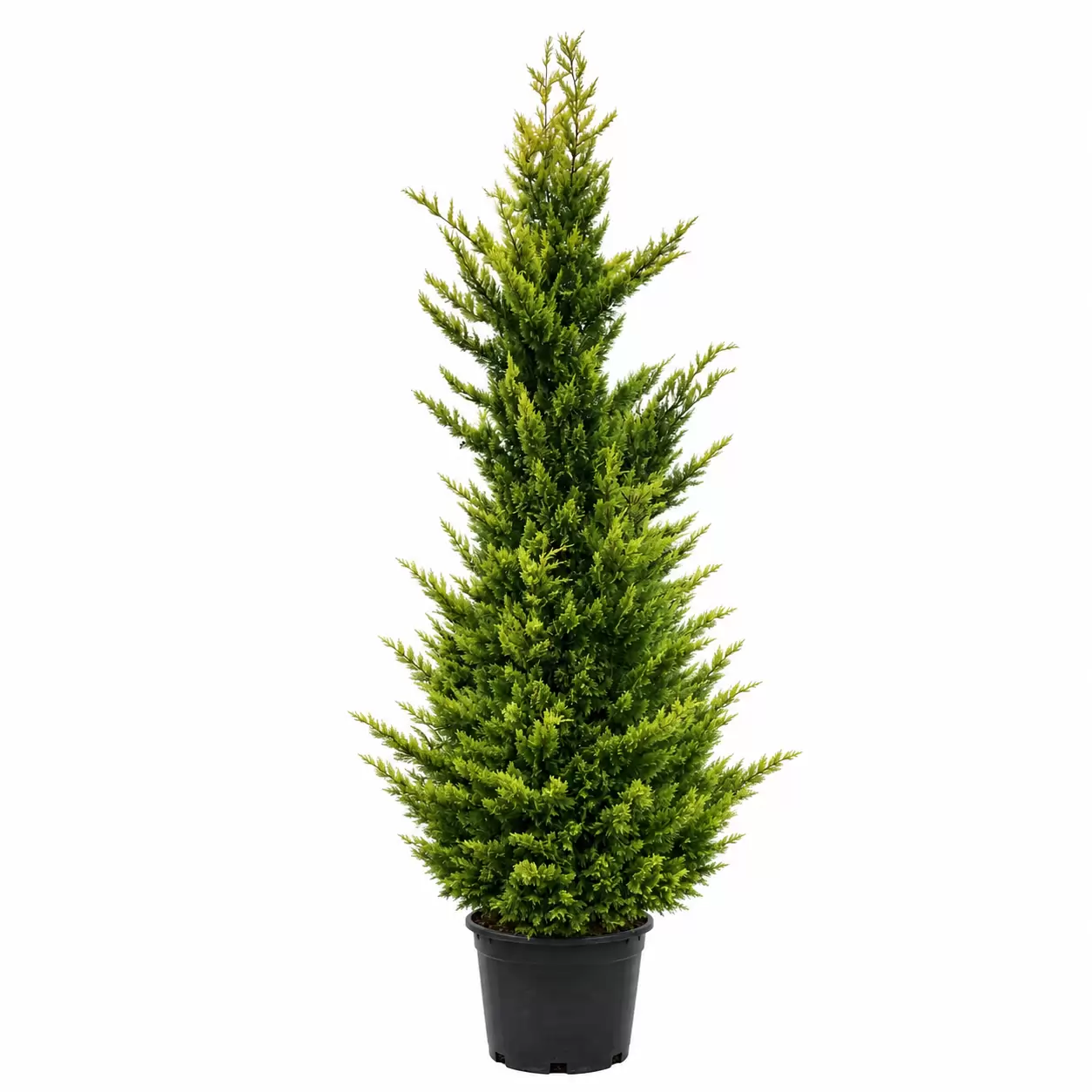
Cupressocyparis leylandii 'Gold Rider' 200-250cm
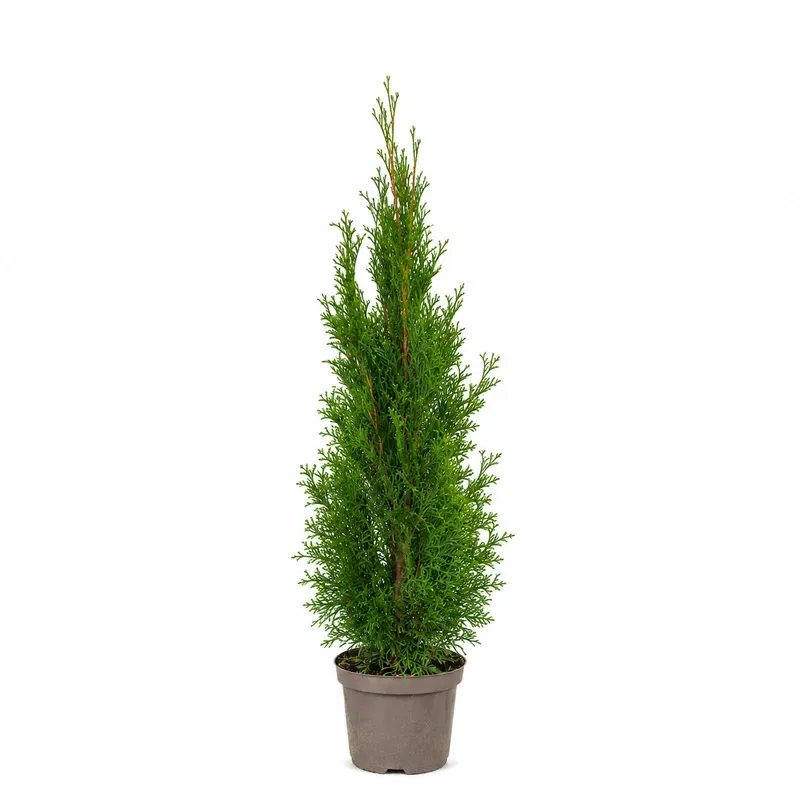
Thuja occidentalis 'Smaragd' 50-60cm

Ограничител / Борд пластмасов с вкл. 2 бр. метални пирони 45х80х1000мм

Иглолистен мулч - средна фракция 40-80 мм, 50л

Комбиниран тор YaraMila "Complex" - 25кг
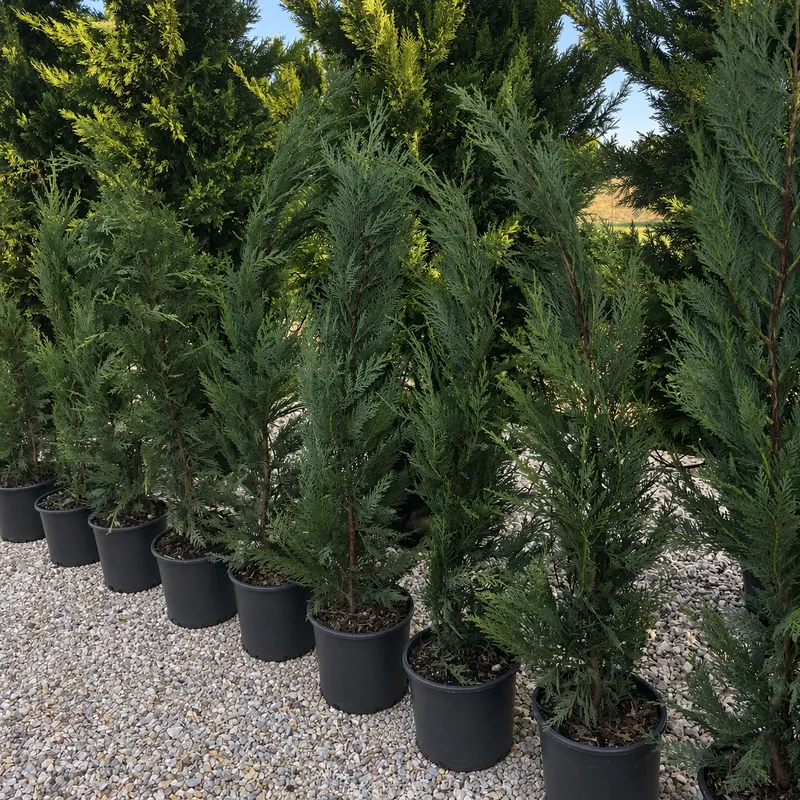
Cupressocyparis leylandii 60-80cm
More on the topic
All articles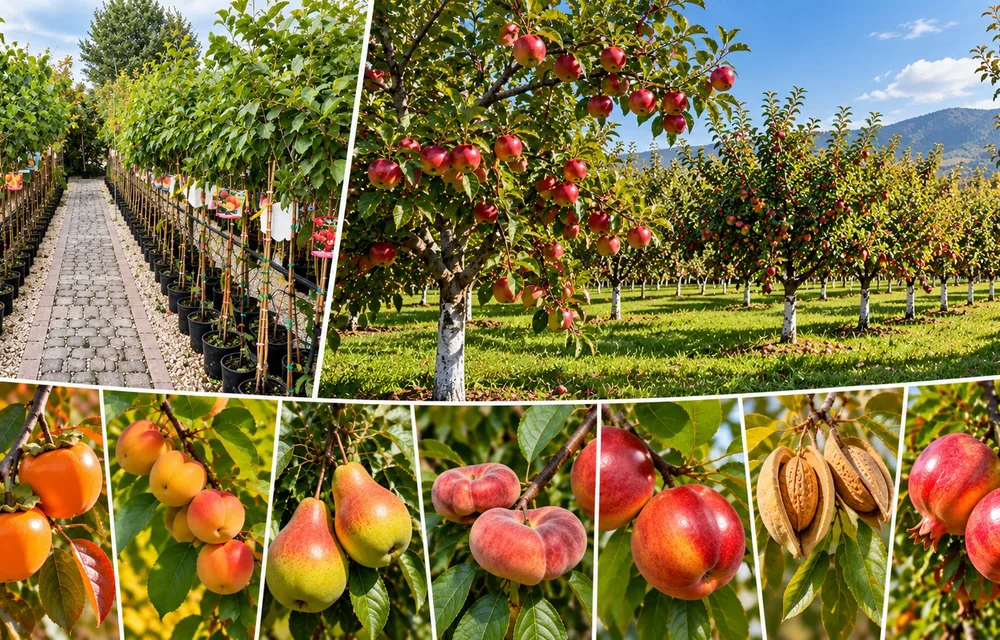
Planting Fruit Trees in Autumn – Practical Tips and New Varieties
Autumn is an excellent time to create or expand your orchard. Discover practical tips for choosing and planting fruit trees and explore the new varieties and species at Flora Design – persimmons, apricots, pears, peaches, nectarines, almonds, pomegranates
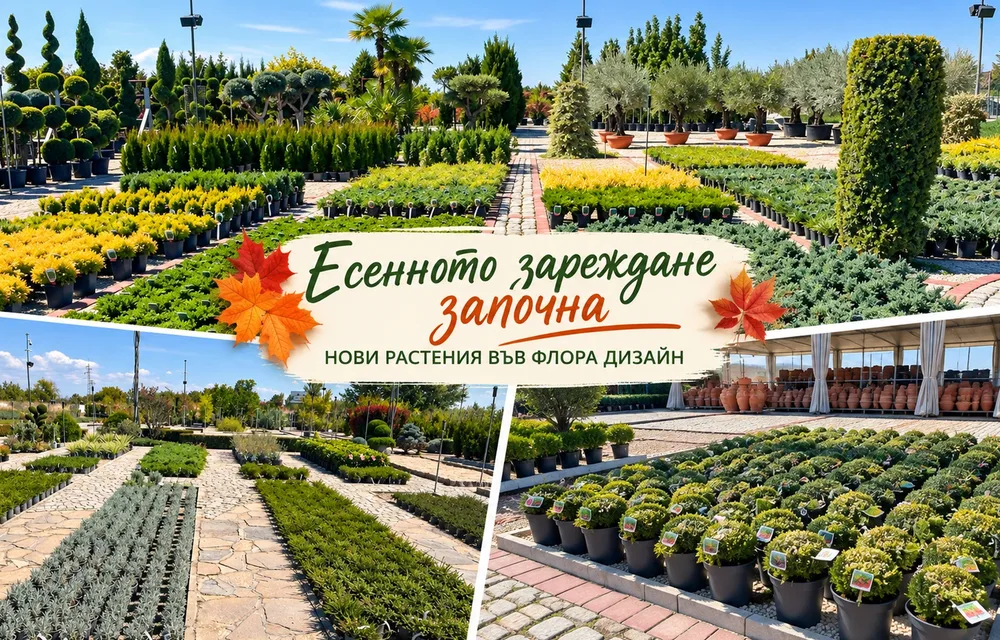
Autumn Restocking Has Begun – New Plants at Flora Design
Autumn restocking has begun at Flora Design. Our new arrivals include ornamental shrubs, conifers and evergreens, flowering varieties and shaped plants in different sizes – ideal for new plantings and beautiful autumn garden displays.
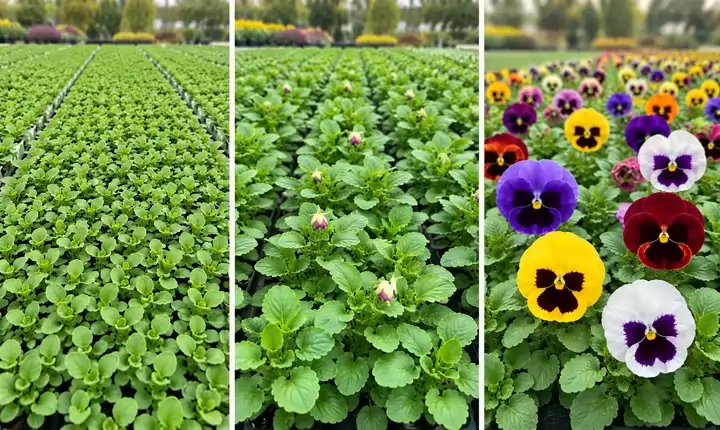
Preparing the autumn flowers – pricking out the pansies has begun.
Preparations for the autumn season have already begun at Flora Design. We are pricking out our young pansy seedlings and caring for them step by step as they develop into beautiful flowering plants for autumn gardens, pots and window boxes.