
Bonsai Olive Trees - Trees with History and Unique Shapes
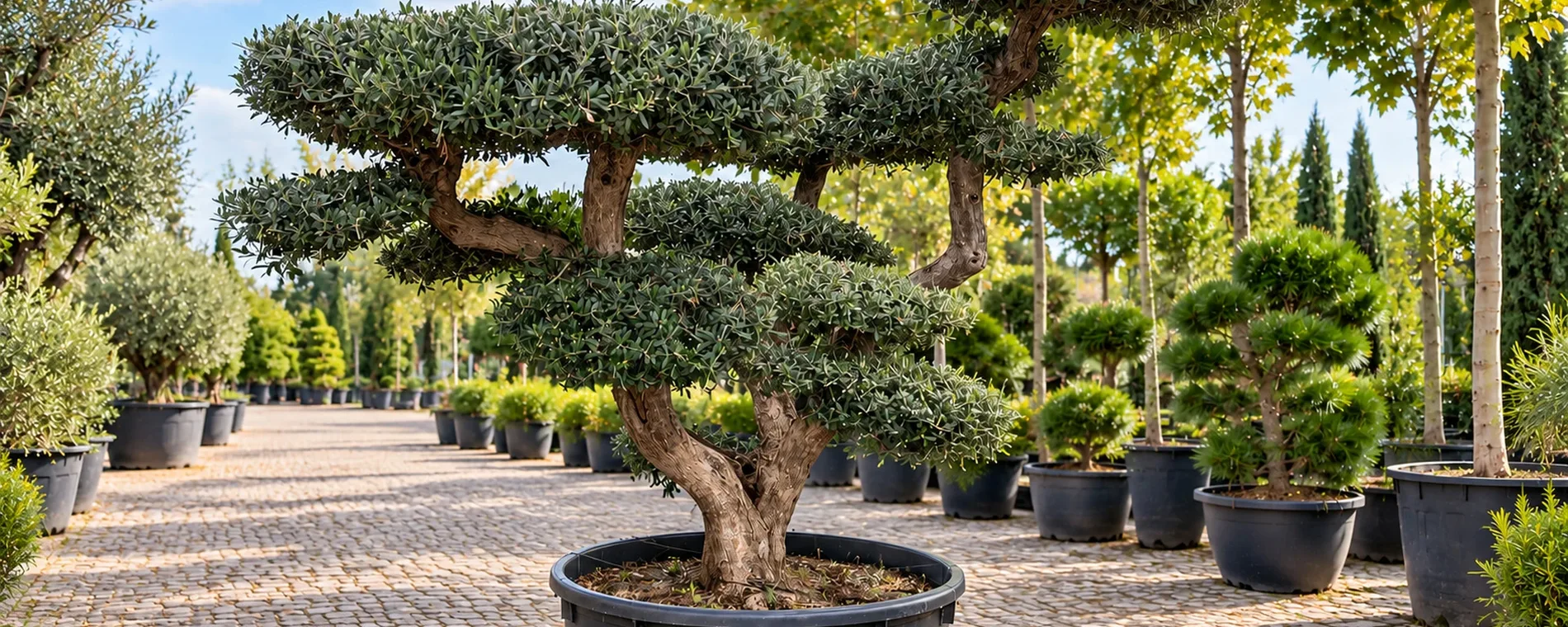
Large olive trees with thick trunks and multi-level shaped crowns, with a long history and a special place in Mediterranean gardens.
The Olive Tree Through the Centuries
The olive tree (Olea europaea) is one of the oldest cultivated trees in the Mediterranean region. For thousands of years, it has been grown for its fruit and olive oil, both of which have played an important role in the food, trade and culture of Mediterranean communities.
In Ancient Greece, the olive tree was associated with the goddess Athena and regarded as a symbol of peace, wisdom and prosperity. The olive branch remains a widely recognised symbol of peace today.
One of the olive tree's most remarkable qualities is its longevity. In Greece, Italy and Spain, olive trees several hundred years old can still be found, while some specimens are believed to be considerably older. Over time, their trunks become thicker, twisted and deeply textured.
These features also make mature olive trees particularly interesting as ornamental plants.
What Makes Bonsai Olive Trees Different?
With large bonsai olive trees, the focus is on the trunk, the main branches and the shape of the crown.
Unlike miniature bonsai grown in shallow containers, these are large olive trees shaped through regular pruning and careful management of their growth.
Their substantial trunks, often curved and covered with deeply textured bark, are complemented by evergreen foliage with a silvery-green appearance. Regular pruning maintains the density of the crown while keeping the main branches clearly visible.
No two trees are exactly alike. The shape of the trunk, the arrangement of the branches and the pruning style give each olive tree its individual appearance.
Different Crown Shapes
The newly arrived olive trees at Flora Design demonstrate several different shaping styles.
Some specimens have wide lateral branches forming dense, horizontally shaped crowns at different heights. These trees feature thick trunks that branch relatively low, with broad, spreading limbs.
Others have taller trunks, with individual branches ending in dense, rounded crowns.
There are also asymmetrical forms, where the main branches extend in different directions. These trees can be appreciated from several viewpoints and used as individual focal points in a garden.
Creating and maintaining these forms requires time and regular care. Pruning controls new growth and preserves the intended crown structure.
Where Can Large Bonsai Olive Trees Be Placed?
Large bonsai olive trees can be used as individual ornamental plants in gardens, courtyards, enclosed outdoor areas and spacious terraces.
Their substantial trunks and shaped crowns stand out against natural stone paving, gravel and low-growing plants. They also suit Mediterranean-style gardens featuring stone, ceramic planters and drought-tolerant planting.
When choosing a location, it is important to allow sufficient space around the crown. This keeps the tree's shape clearly visible and makes pruning and maintenance easier.
Growing Bonsai Olive Trees in Bulgaria
Olive trees prefer sunny positions, well-drained soil and moderate watering. They do not tolerate prolonged waterlogging around their roots.
During the growing season, container-grown trees should be watered according to the temperature, container size and moisture level of the growing medium. The soil should not remain constantly saturated.
Winter protection is particularly important. Olive trees can tolerate brief periods of cold weather, but their cold resistance depends on the age and condition of the tree, the duration of low temperatures and the growing conditions.
In areas with cold winters, including Plovdiv and inland Bulgaria, large container-grown olive trees should be protected from prolonged freezing temperatures. Where possible, they should be moved to a bright, cool, frost-free space.
For very large and heavy specimens, winter storage should be considered before choosing their permanent location.
To maintain the shaped crown, new shoots should be pruned periodically without disturbing the tree's main branch structure.
New Bonsai Olive Trees at Flora Design
Our latest arrival includes large olive trees with different trunk shapes and crown structures.
Some have broad, horizontally arranged branches, while others feature separate rounded crowns. These variations make it possible to select a tree that suits the available space and the intended garden design.
The olive trees are in stock and can be viewed and selected in person at the Flora Design Garden Centre.
Each of these trees is the result of years of growth and shaping. Even when its exact age is unknown, the trunk and branches reveal how the tree has developed over time.
Visit Flora Design to explore our new bonsai olive trees and choose a suitable specimen for your garden or terrace.
Products from the article
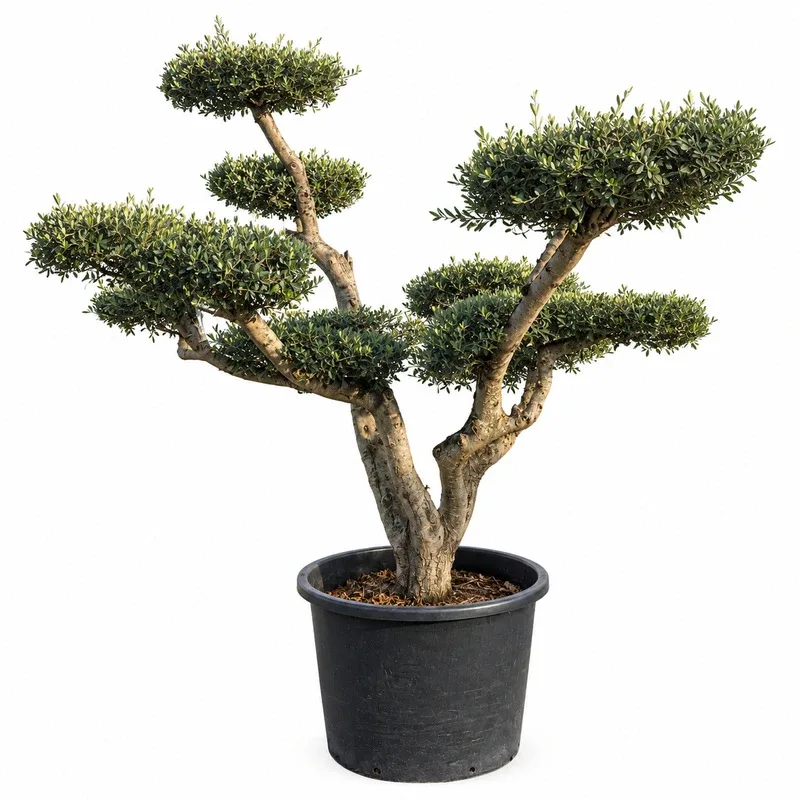
Olea europaea Bonsai Extra 180-190cm
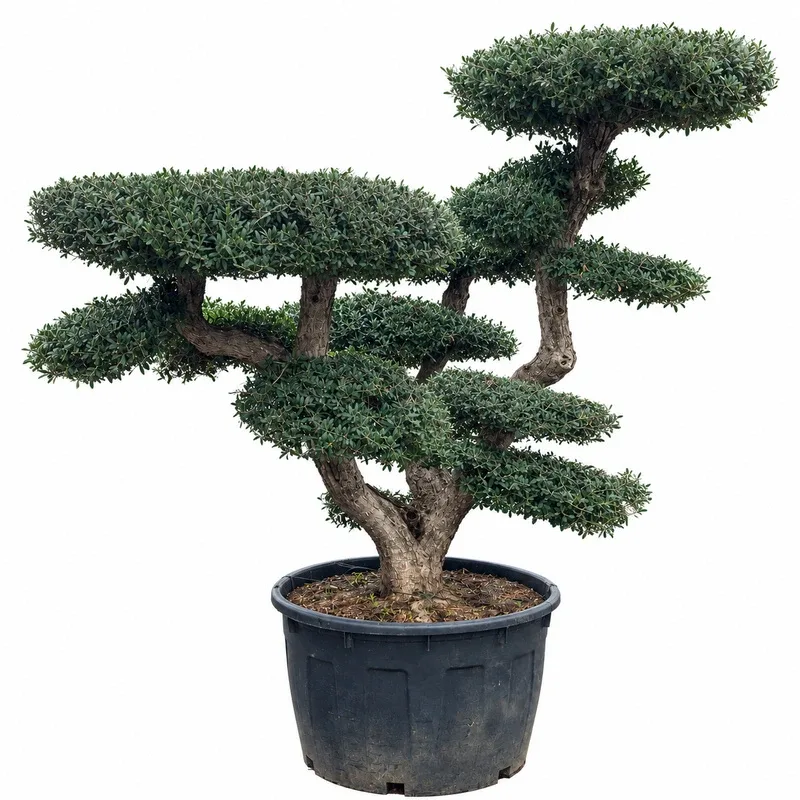
Olea europaea Bonsai Extra 190/200cm
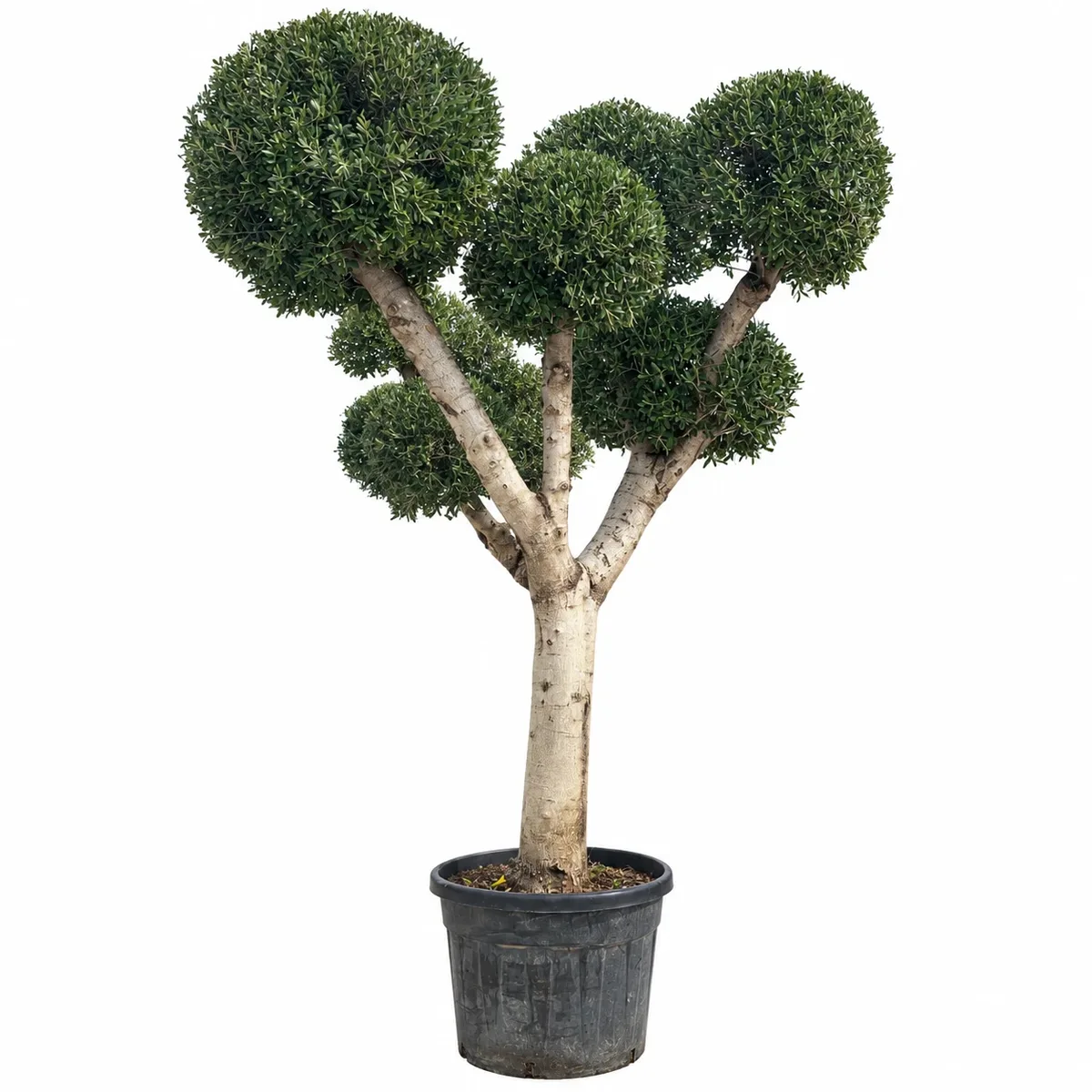
Olea europaea Bonsai 230-250cm
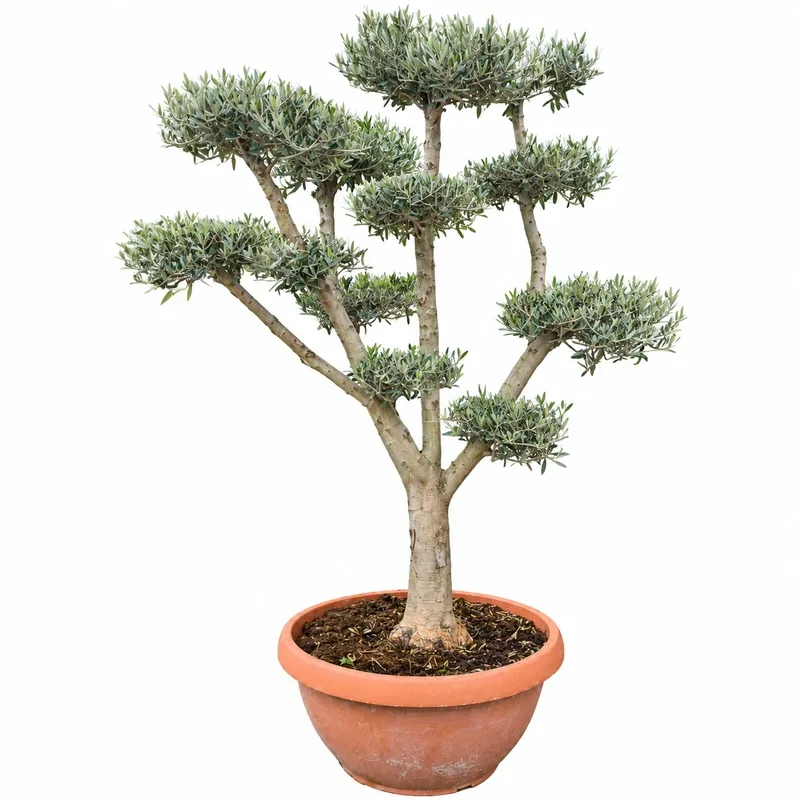
Olea europaea Bonsai - 180/200cm
More on the topic
All articles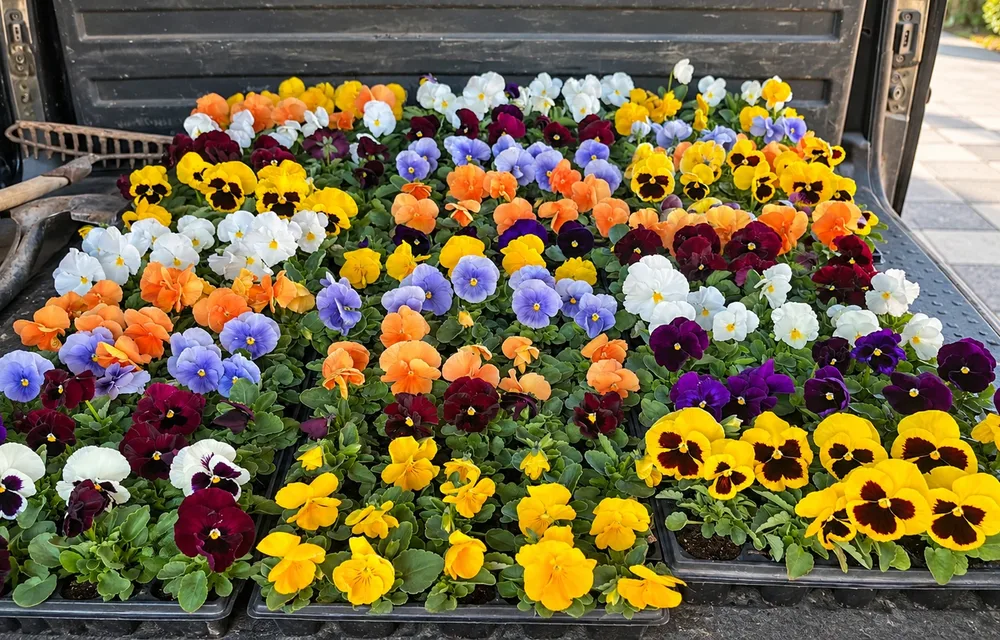
Large-Flowered Pansies in a Colorful Mix - Ready for Delivery and Planting
Our large-flowered pansies are now blooming abundantly. We are selecting colorful mixes and preparing the first customer orders.
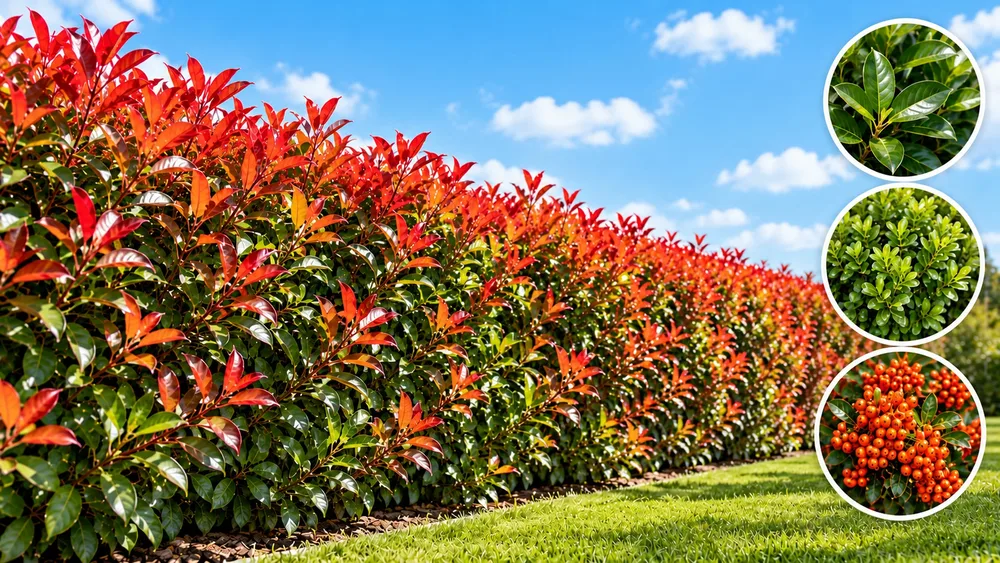
Broadleaf Hedges – Which Plants Should You Choose?
Photinia, Cherry Laurel, Privet or Pyracantha? Discover which shrub suits your garden and how to care for your hedge.
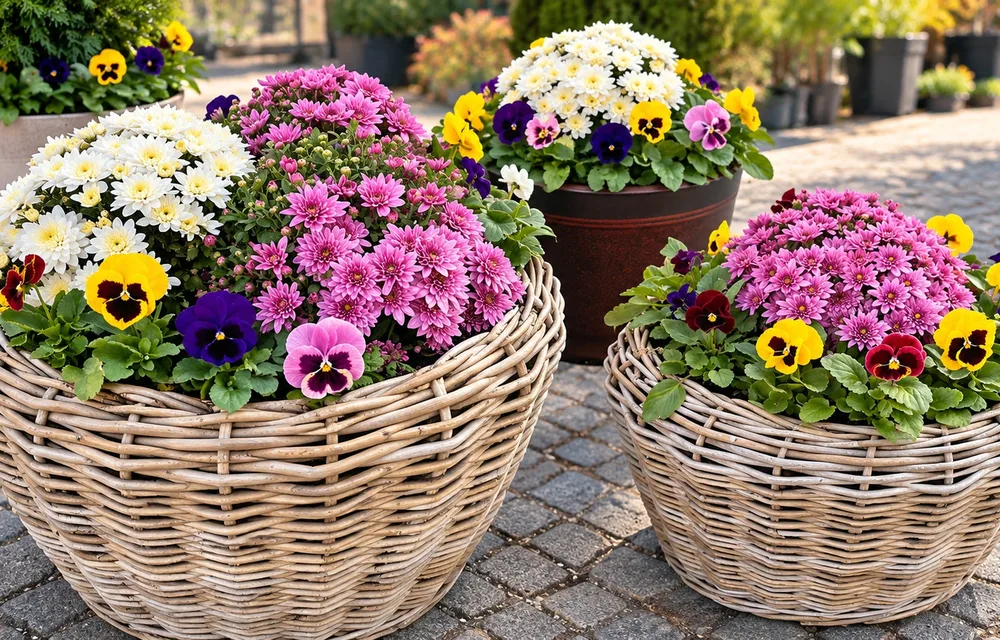
Autumn Planter Arrangements – Ideas with Pansies and Chrysanthemums
As autumn arrives, we refreshed our customers' planters by replacing summer geraniums with colourful arrangements of pansies and chrysanthemums. Explore real examples from Flora Design Garden Centre and discover practical tips on preparing planters.